How Should the Material of a Pressure Vessel Head Be Selected? How to Choose the Right Head for Different Working Conditions
Comparison of Carbon Steel and Stainless Steel Applications: Controlling Pressure Vessel Safety from
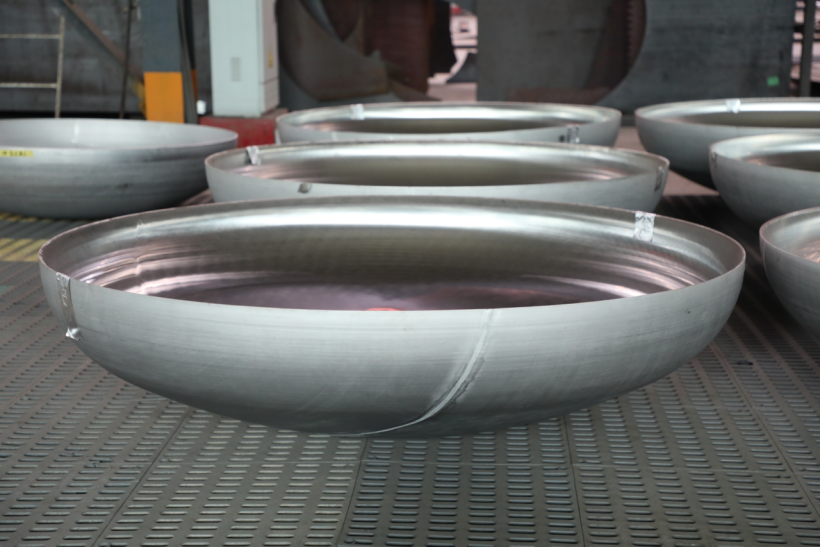
Pressure vessel heads are core components of pressure-bearing equipment. The choice of material directly determines the pressure-bearing limit, corrosion resistance, high-temperature resistance and service life of the entire equipment set. If the material does not match the actual working condition medium, temperatureand pressure, major safety hazards such as corrosion thinning, crackingand leakage are very likely to occur. Therefore, in the project design stage, head material selection is a key link that cannot be ignored. Henan Jiutian Head Manufacturing Co., Ltd. strictly controls incoming raw material inspection and can provide heads in various materials such as carbon steel, low-alloy steel and stainless steel. It provides customized production for different media, temperature and pressure working conditions, meeting the requirements of domestic GB and overseas ASME standards.
Carbon Steel & Low-Alloy Steel Heads
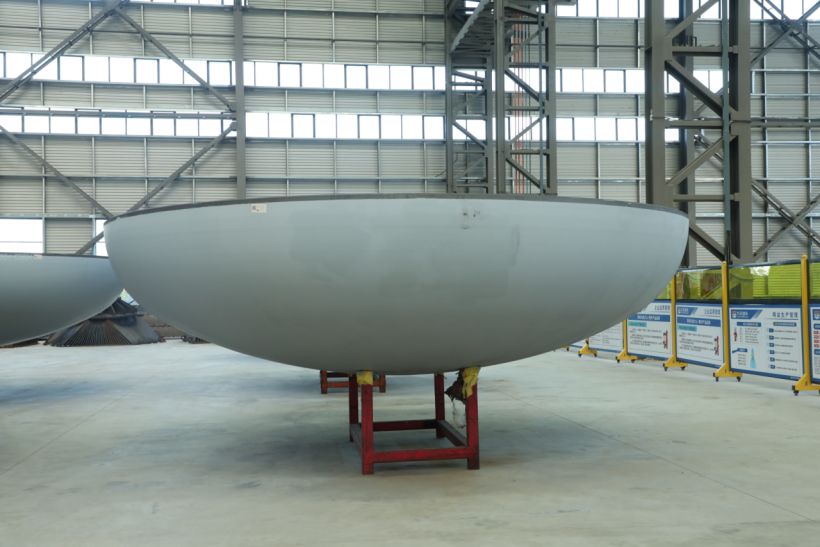
Mainly includes pressure vessel dedicated steel plates such as Q245R, Q345R and SA516Gr.70.
Material advantages: Sufficient material supply, mature welding and forming processes, stable mechanical strength, high overall cost-effectivenessand good adaptability to both low and high temperatures.
Applicable working conditions: Conventional working conditions without highly corrosive media. Widely used in ordinary petrochemical storage tanks, boiler drums, heat exchange equipment, low-pressure reaction vessels and gas storage tanks.
Manufacturing key points: Batch-by-batch verification of material certificates for incoming raw materials, with spectral re-inspection completed; after pressing/spinning forming, heat treatment for stress relief and non-destructive testing, residual stresses from welding and forming are eliminated.
304/316L Austenitic Stainless Steel Heads
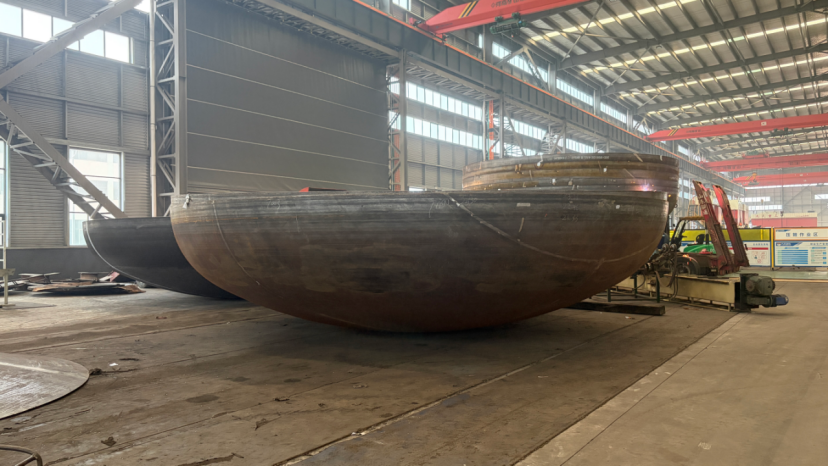
304/316L are the most commonly used stainless steel materials for corrosion-resistant working conditions.
304 stainless steel: Offers basic oxidation and corrosion resistance, with a smooth surface that is easy to clean. Suitable for water vapor, ordinary gases and weakly corrosive media; mostly used in food tanks, ordinary water treatment equipment and room-temperature chemical storage tanks.
316L stainless steel: With added molybdenum, it significantly improves resistance to pitting corrosion and chloride ion corrosion and resists seawater and brine media attack. Suitable for coastal equipment, seawater desalination units, chlorine-containing chemical media and pharmaceutical production equipment.
Manufacturing key points: Stainless steel forming shows obvious work hardening, so the forming rate must be controlled during production; solution heat treatment is required to restore material plasticity and corrosion resistance; after forming, pickling and passivation treatment is performed; the production area is isolated from carbon steel workpieces to prevent iron ion contamination.