
Material Analysis of Stainless Steel & Clad Plate Heads | Selection & Manufacturing Essentials for Corrosive Operating Conditions
Selection and Manufacturing Key Points of Stainless Steel and Clad Plate Heads for Corrosive Service
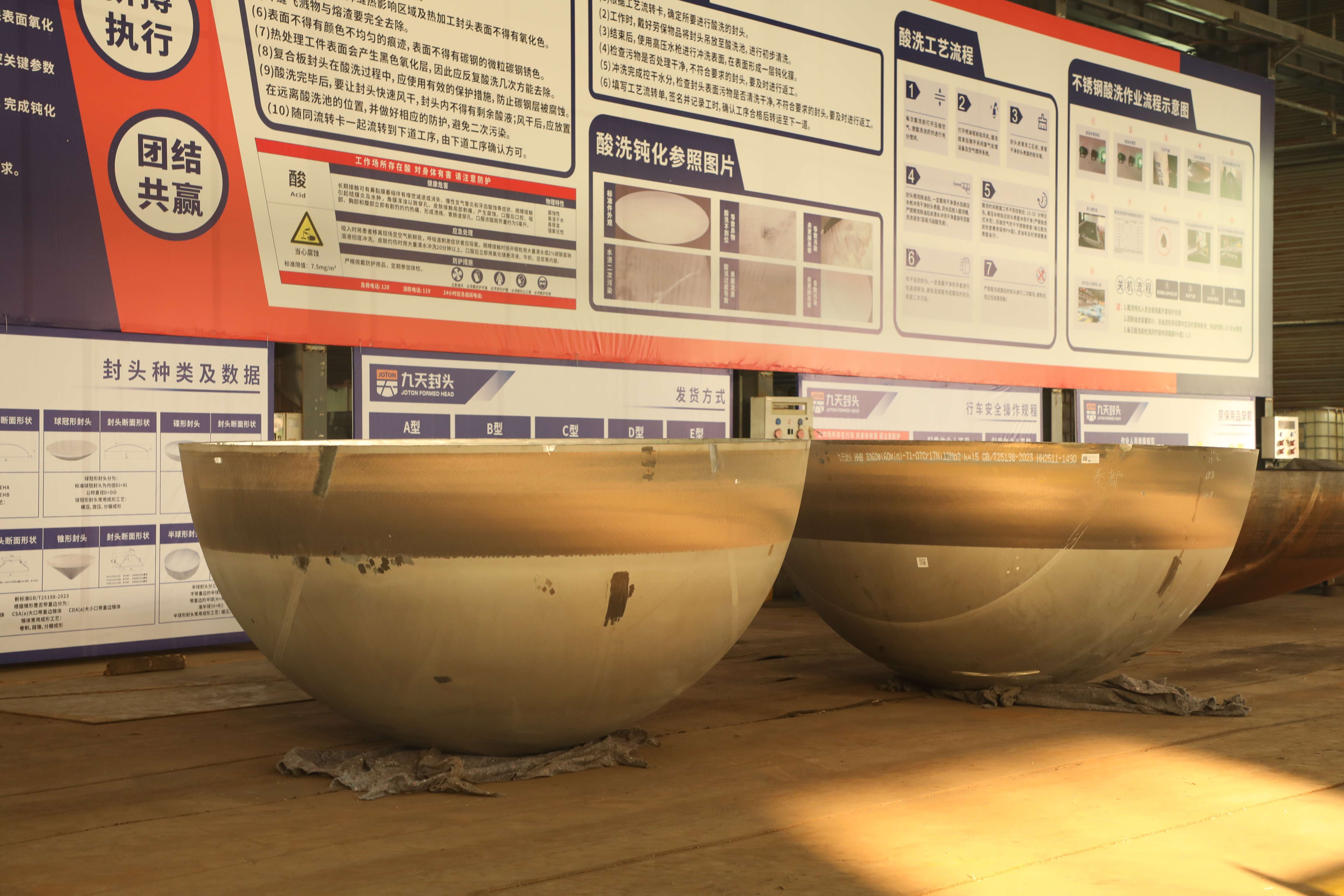
The material selection for pressure vessel heads directly determines an equipment's corrosion resistance, pressure-bearing capacity and service life. For corrosive operating conditions in industries such as chemical processing, pharmaceuticals, food production and seawater treatment, stainless steel heads and explosion-bonded clad plate heads are the two most widely used corrosion-resistant pressure caps, each having its own emphasis in material properties, forming processes, and application scenarios.
Stainless steel heads are integrally formed from austenitic stainless steels such as 304 and 316L. They feature excellent corrosion resistance and weldability, with smooth surfaces easy to clean and are widely used in equipment requiring high cleanliness and anti‑corrosion performance, including food processing, pharmaceutical production, water treatment and chemical storage tanks.
304 stainless steel offers good resistance to oxidizing acid corrosion, suitable for general atmospheric, water and steam service conditions. With molybdenum added, 316L delivers superior resistance to pitting and chloride‑ion corrosion, making it suitable for coastal facilities, seawater desalination and chemical vessels handling chloride‑containing media. Stainless steel heads can be manufactured into various configurations including elliptical, dished, conical, hemispherical and flat‑bottom types. The surfaces are typically pickled and passivated to further enhance corrosion resistance and aesthetic quality.
Because stainless steel exhibits a pronounced work-hardening tendency during forming, it is essential to properly control forming rates and heat treatment parameters during manufacturing to prevent cracking caused by cold work hardening. Solution heat treatment—achieved by rapidly heating to the solution temperature followed by quick quenching to fully dissolve carbides, serves as the critical process to restore the material's original corrosion resistance and ductility.
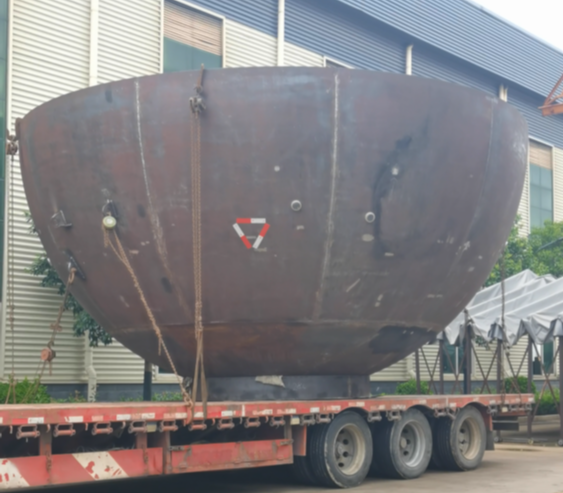
Explosion-bonded clad plate heads consist of a base layer of carbon steel or low-alloy steel and a cladding layer of stainless steel or nickel-based alloy, achieving metallurgical bonding between the two metals through explosive welding. The base layer provides structural pressure resistance, while the cladding layer comes into contact with corrosive media. This design maintains the head's structural strength while significantly reducing the consumption of expensive corrosion-resistant alloys, offering a cost-effective solution for large-diameter, thick-walled anti-corrosion heads. The core difficulty in forming clad plate heads lies in controlling the bond state between the cladding layer and the base material: excessively high hot-working temperatures can cause alloying elements in the cladding to diffuse, leading to reduced corrosion resistance, whereas over-deformation during forming can trigger interfacial delamination. Therefore, heating temperature ranges and deformation rates must be strictly regulated during manufacturing, and post-forming liquid penetrant testing (PT) is performed on the cladding surface to ensure the bonded interface is free of delamination or cracking. Welding bevels are typically designed on the cladding side, with the welding sequence starting at the base layer weld seam, followed by the transition layer, and finally the cladding layer, which prevents the carbon steel weld from diluting the alloy content of the cladding layer and ensures optimum corrosion resistance across the welded zone.
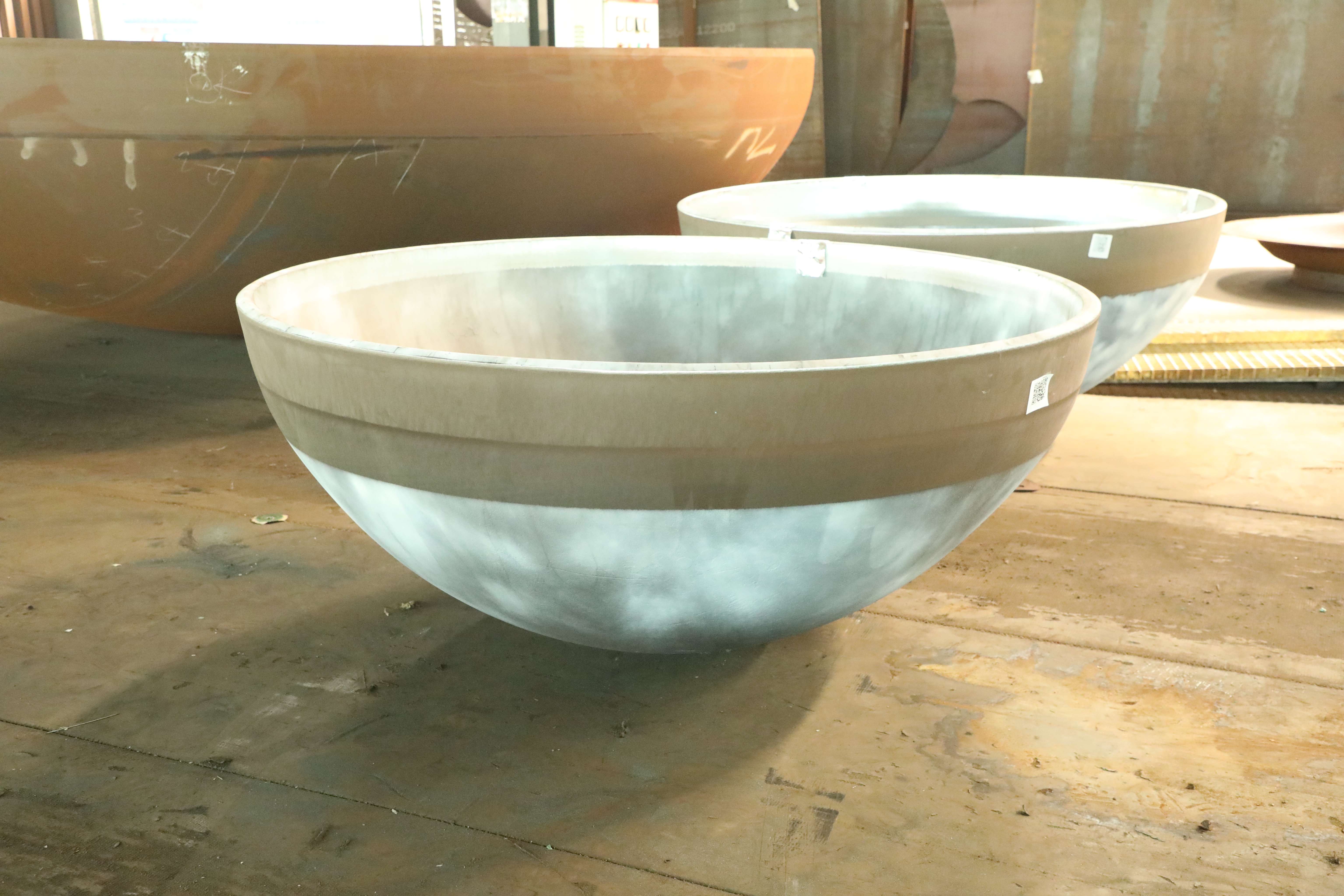
In practical material selection, 304 stainless steel heads are suitable for standard water, steam, and atmospheric conditions, while 316L stainless steel heads are recommended for environments containing chloride ions or coastal conditions. For large-diameter, thick-walled equipment operating in highly corrosive environments, carbon steel plus stainless steel explosion-bonded clad plate heads are preferred, whereas extreme operating conditions involving strong reducing acids or high temperatures warrant carbon steel plus Hastelloy or titanium clad plate heads. Proper material selection combined with a rigorous forming process is the key to ensuring the long-term, safe operation of anti-corrosion heads, as matching materials based on medium characteristics, operating temperatures, and pressure ratings delivers optimal cost control while fully satisfying performance requirements.
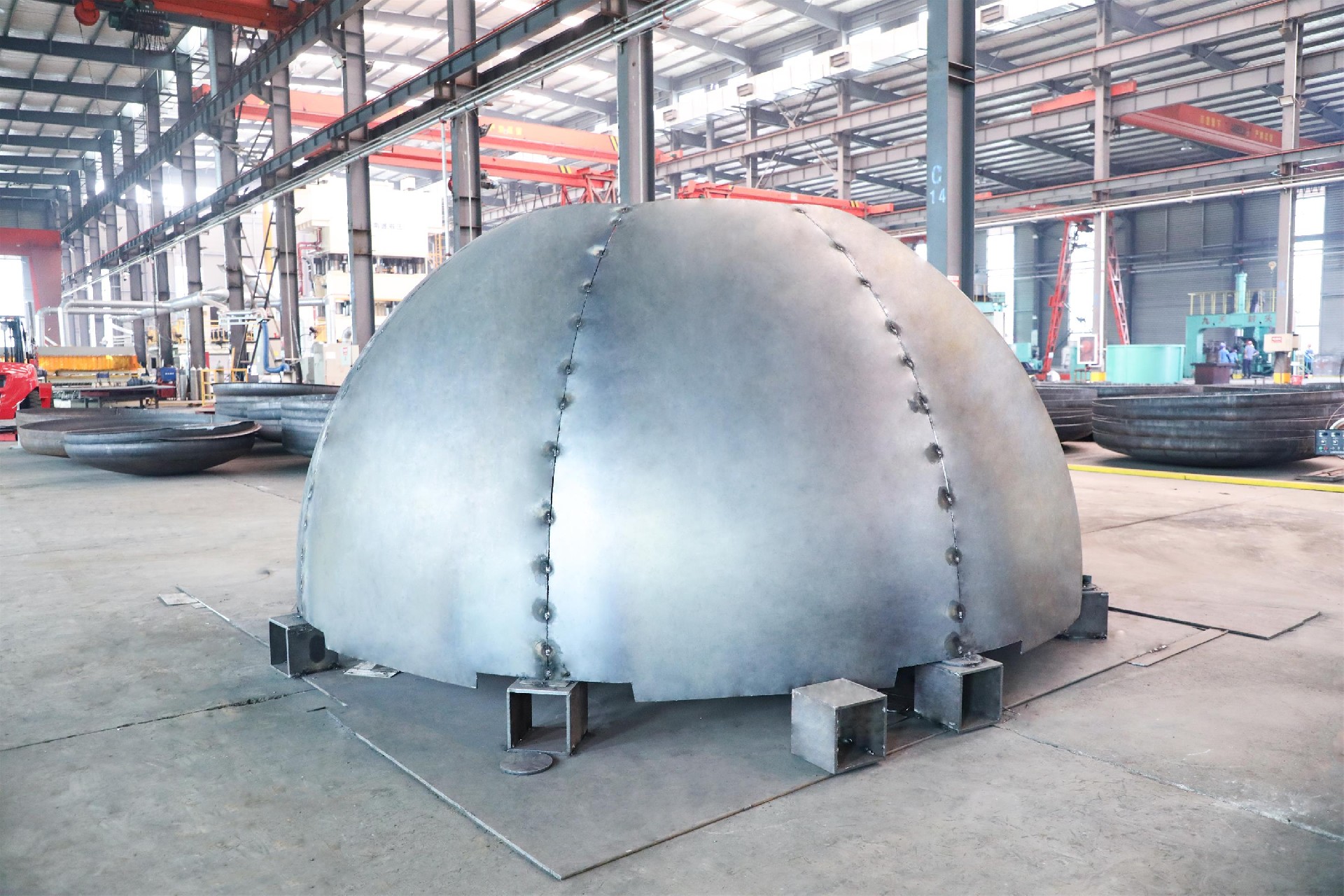
Furthermore, the manufacturing of stainless steel and clad plate heads requires strict separation from carbon steel production areas to prevent surface iron contamination. After forming, dimensional checks, visual inspections, cladding liquid penetrant testing (PT), and ultrasonic testing (UT) are conducted sequentially to verify geometric accuracy and bond line quality, with edge beveling performed using CNC milling machines to guarantee precise fit-up during welding assembly.
For export orders, Henan Jiutian Head Manufacturing Co., Ltd. provides a full suite of technical documentation—including Mill Test Reports (MTR/MTC), heat treatment logs, and NDT inspection reports—fully satisfying ASME standards and overseas project review requirements.
